Sunday Review - March 9, 2026
Last week’s market tested even experienced traders as rising oil prices, climbing bond yields, and geopolitical tensions fueled volatility. With the VIX approaching 30 and major indexes weakening, disciplined risk management may matter more than ever as traders prepare for the week ahead.
A Market That Tested Even Experienced Traders
Last week’s market challenged even experienced traders.
Headlines surrounding the ongoing conflict with Iran kept uncertainty elevated, pushing oil prices above $91 per barrel while bond yields continued climbing, with the 30-year Treasury finishing the week near 4.67%.
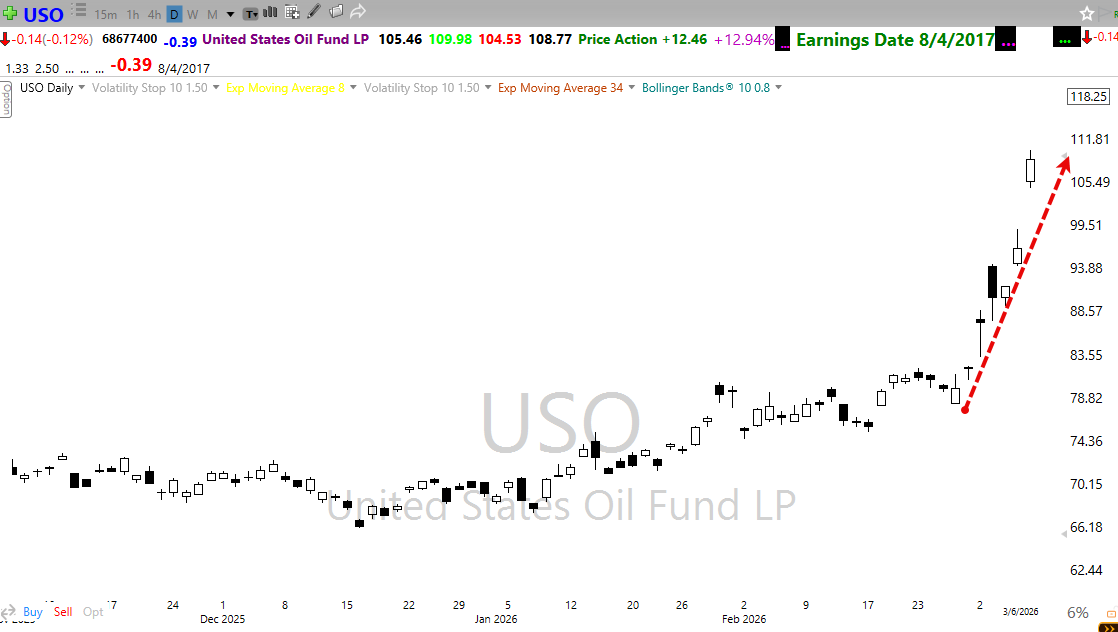
That combination of rising energy prices and economic uncertainty created a difficult environment. Overnight reversals became common as markets struggled to balance slowing economic signals with the inflationary pressure that higher energy prices can bring.
The latest employment report added another layer of concern, keeping bearish pressure active while traders now look ahead to the Federal Reserve’s next rate decision on March 18.
Until geopolitical tensions begin to ease and energy prices stabilize, this type of volatile and emotionally driven market environment may continue.
What Was Happening Beneath the Surface
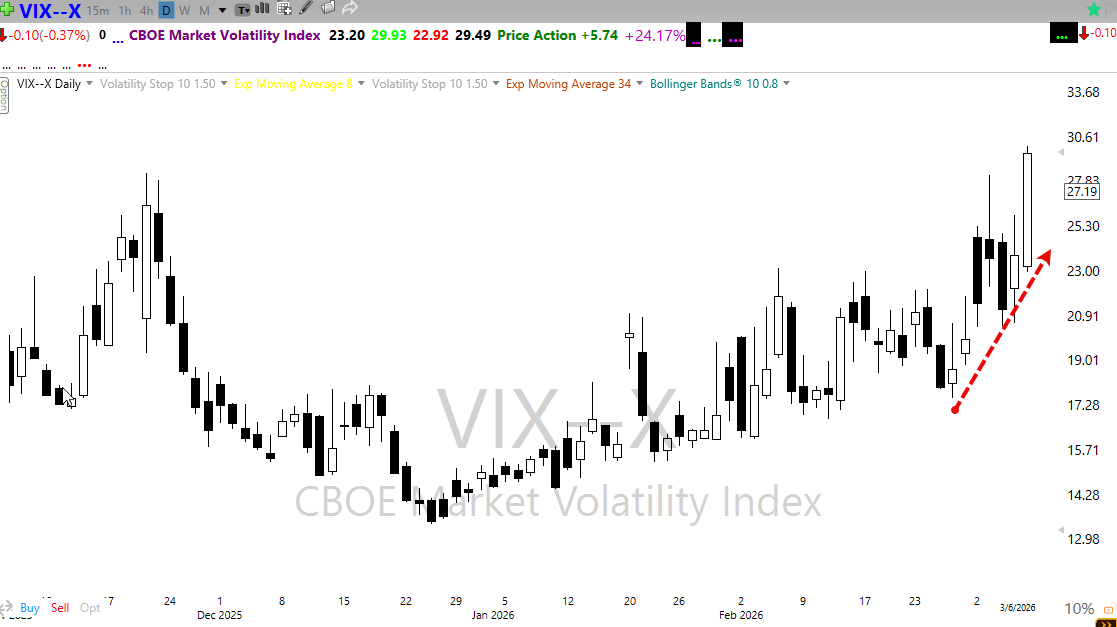
Volatility surged into the end of the week, with the VIX closing above 29 as selling pressure intensified. Market breadth expanded to the downside during Thursday and Friday’s selloff, reinforcing the broader downtrend developing across the major indexes.
Technically, the damage is becoming more visible. All major indexes are now trading well below their 50-day moving averages, signaling weakening intermediate-term momentum.
Despite the broad market weakness, certain defensive areas held up relatively well. Energy, utilities, and exploration stocks remained resilient, while high-dividend sectors such as telecommunications attracted interest as investors looked for stability.
If geopolitical tensions persist and energy prices remain elevated, this fragile market structure could continue producing sharp emotional swings and overnight reversals.
The Lesson Traders Should Take From This
Periods of high volatility often cause traders to do exactly the opposite of what they should be doing.
Fear of missing out becomes a powerful force. Traders begin aggressively searching for the perfect bottom, hoping to catch the next sharp reversal. Unfortunately, many traders were punished by that behavior last week.
Over the past several years, markets have conditioned traders to believe that sharp declines will quickly reverse and push back toward new highs. In the current environment, that assumption may not hold true—especially if rising energy prices continue to pressure the broader economy.
Although the market now appears to be entering a short-term oversold condition, traders should remember that headlines in this environment can easily push prices lower again.
Relief rallies are certainly possible, but disciplined traders should remain focused on overhead resistance rather than assuming the market will immediately rip back to prior highs.
What Disciplined Traders Should Do
Markets like this often tempt traders into overtrading—one of the fastest ways to damage both an account and a trader’s confidence.
The more appropriate response is often the opposite.
Trade less.
Reduce position size.
And be quicker to protect profits when they appear.
Although our goal as traders is to grow our accounts, environments like this can easily lead to giving back more than we make if we allow activity to replace discipline.
In more than 30 years of trading, some of my largest drawdowns occurred during periods like this when I failed to recognize that market conditions simply did not fit my style of trading.
Activity does not equal results.
When volatility is elevated and the VIX approaches 30, even skilled traders face lower-probability conditions.
What to Watch in the Week Ahead
The upcoming week features a lighter earnings calendar, with retail companies making up many of the remaining reports. Walmart will likely be one of the more closely watched names.
The economic calendar, however, could drive volatility. Traders will be watching:
• CPI inflation data
• Existing home sales
• Durable goods orders
• GDP and PCE data later in the week
Friday in particular could bring significant movement depending on how the economic numbers come in.
At the same time, developments in Iran could quickly sway market sentiment in either direction.
The market now appears short-term oversold, which could produce a relief rally. However, traders should remain cautious as price approaches significant resistance levels.
Discipline Matters Most in Volatile Markets
In the week ahead, traders would be wise to lean heavily on their trading rules and risk management.
If the market begins to rally, fear of missing out will likely become a powerful emotional driver again. Planning risk in advance becomes critical in environments like this.
Remember that our primary responsibility as traders is protecting capital.
There is no shame in stepping aside when volatility becomes extreme. Markets eventually return to conditions that are easier to trade, but forcing trades during chaotic periods can quickly turn a difficult week into a very expensive one.
As I often remind traders:
Activity does not equal results.
Allowing emotions to dictate decisions in a volatile environment can lead to a very long week.
A New Weekly Resource for Traders
This review marks the beginning of what I intend to develop into a weekly Sunday newsletter.
If you found this helpful, please consider supporting the channel as I build the structure needed to deliver this review consistently each week. Your feedback and suggestions are always welcome as we work together to create something that helps traders better prepare for the week ahead.